

 +49 (0)30 44 32 41 66
 hello@sapera-studios.de
 LinkedIn

Managing Director
What lands in the market, what sales actually uses, where brand and product drift apart. Conversations with the people who work with it every day.
One core statement that holds for engineering, procurement and management — and that can be told in short and in depth.
Brand architecture, design and formats, developed on real use cases rather than sample pages.
Rules, library and training. Plus regular sessions in which brand and strategy keep growing.
Three industrial and retail brands, three different starting points.
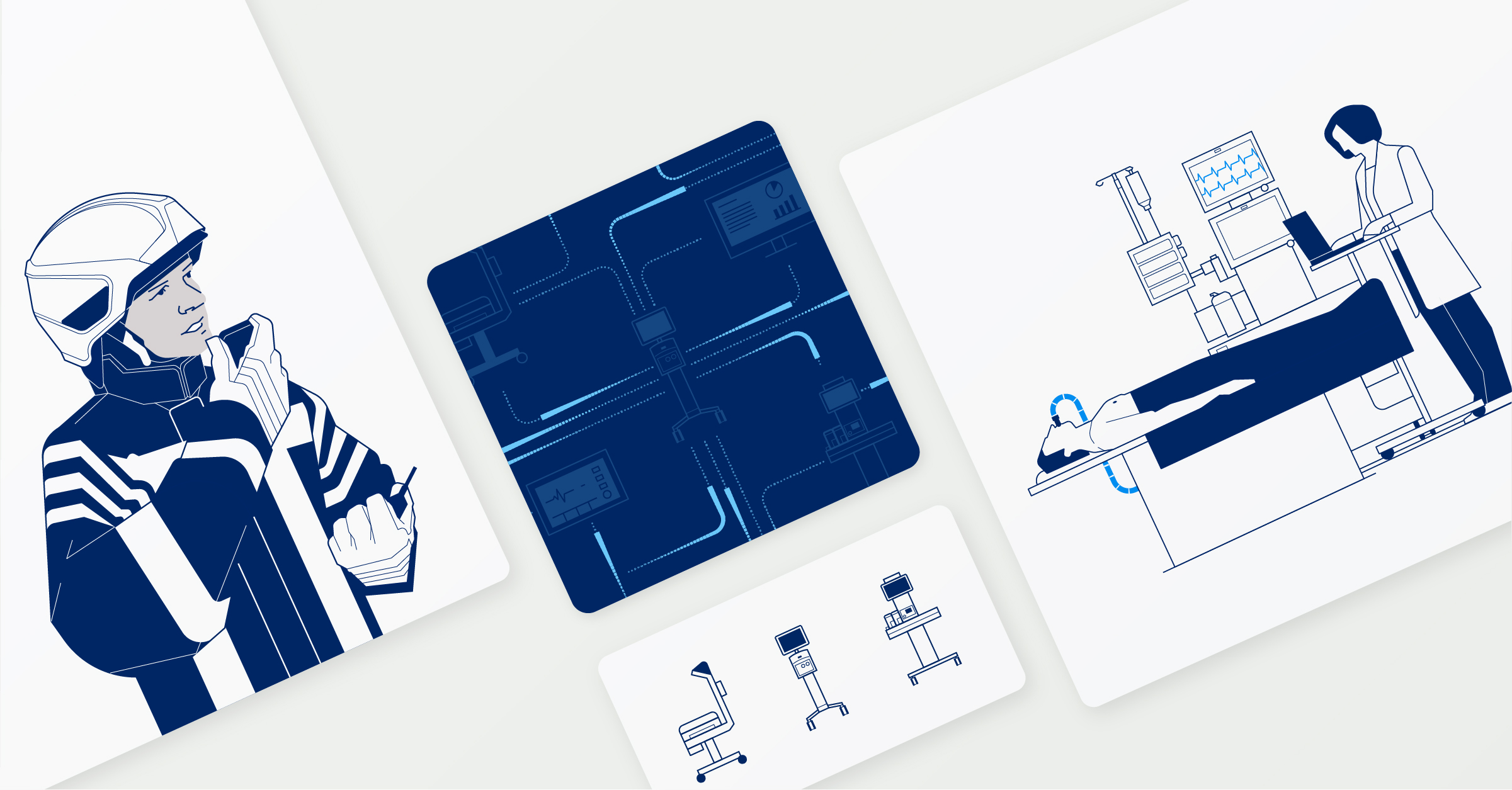 Dräger · Preferred Agency PartnerAn illustration and design system the in-house team runs themselvesView project ↗
 Schwarz Gruppe · Preferred PartnerFrom sustainability report to LinkedIn content strategyView project ↗
 WallroundBrand architecture for a market that needs explainingView project ↗
Documented numbers from these projects: for Dräger, over 800 assets across more than 50 markets, with about 45 percent less effort per application. At Wallround, conversion rose by 35 percent. Then there's Victorinox, with an illustration system and model library for an industrial classic, a technical article on IAA Transportation for Bucher Hydraulics, and a service infographic for TOMRA.
We lead the work for ENERTRAG, and as preferred partner for Dräger, the Schwarz Gruppe and the Hasso Plattner Institute — some grown out of a first project, others won in the pitch from the start. In the lead role, strategy, overarching planning, and project management come together with us across departments, instead of each initiative being awarded separately and set up from scratch.
We manage external service providers — illustration, photography, print, specialized agencies — under one shared system. At Dräger, that's currently more than 25 connected providers. Every piece of work goes through the same quality and brand review before it ships.
There's one fixed point of contact instead of many separate contracts — backed by our leadership, the core project team, and, where needed, specialists from other teams. In quarterly meetings, we actively develop the brand and strategy further, rather than just working through a list of tasks.
Leading the work means we already know the brand, its history, and the people involved. That skips the ramp-up that starts from scratch with every new provider, and makes planning and budgeting more reliable over the life of the agreement.
A well-defined project — an illustration system, an infographic series, a brand workshop — takes weeks and is the usual starting point. A positioning with brand architecture runs over months. A full design system with guidelines and enablement is a year-long undertaking.
What a project costs depends on its scope and duration. In the first conversation, we place it using comparable projects.

Sapera Studios GmbH
Kastanienallee 10
10435 Berlin
Sapera Studios ist eine Strategie- und Kommunikationsberatung für komplexe Themen in Berlin. Von der Strategie bis zur Umsetzung.
Storytelling, Narrative und Strategie · Faktencheck · Designsysteme · Beteiligung und Befähigung · Change Management und Prozessbegleitung
Mit Aude befähigen wir Teams, mit KI Kommunikation zu machen, die stimmt und zur Marke passt.

 Datenschutz
 Impressum